Second Step® Elementary
Program highlights
- Evidence-based, easy-to-teach lessons
- Engaging videos and activities
- Core human skills instruction
- Support for positive classroom climates
- Tools to help students succeed
Unmatched evidence. Proven impact.
Independent research involving more than 19,000 elementary students shows Second Step K–8 digital programs deliver consistent, real-world gains in climate, belonging, and behavior.
Academic motivation

Prosocial behavior

Self-management

Out-of-school suspensions
Four powerful, research-backed program units
Unit 1: Growth Mindset & Goal-Setting
.svg)
Students learn how to develop a growth mindset and apply research-based goal-setting strategies to their social and academic lives. This unit’s content helps create classrooms that are connected and encouraging by helping students set and achieve collective and personal goals and learn from challenges and mistakes.
Unit 2: Emotion Management
Students learn how to build their emotion vocabularies, practice identifying their own and others’ emotions, and recognize the importance of labeling and processing their emotions. This unit’s content helps students understand and explore how past experiences as well as unique perspectives influence how they feel and respond to situations.
Unit 3: Empathy & Kindness
Students learn how to recognize kindness and act kindly toward others and how to develop empathy by learning strategies to take others’ perspectives. This unit’s content helps students understand others’ points of view.
Unit 4: Problem-Solving
Students learn how to process strong emotions, describe a problem, identify the wants and needs of others, think of and explore the outcomes of potential solutions, and pick the best solution. This unit’s content helps students ask, listen, and empathize with all parties involved during problem-solving.
Sample a lesson
Support every learner with tiered interventions

Small group lessons
Targeted small group lessons that build specific skills—like emotion regulation, flexible thinking, and problem-solving—for students who need more than universal instruction
Resources for individual supports
Additional resources, including behavior support tools and educator guidance, that help educators address higher-need, individualized skills gaps
Assessment Toolkit
A built-in Assessment Toolkit with a universal screener, teacher-report human skills rubric, and progress-monitoring guidance to identify needs and track growth
Reinforce the program with supplemental content
- Optional Mind Yeti® mindfulness sessions and four introductory videos invite kids to calm their minds, focus their attention, and connect to the world around them so they can be ready to learn.
- Songs help students remember concepts from each unit. Listen, sing, or play along.
- Engaging videos bring key concepts to life and support classroom learning with real-world examples and relatable storytelling.
- Extension activities are designed to engage students through art, games, and movement.
- Downloadable posters, mini and full-size, are included as part of the Second Step Elementary digital program. Full-size printed posters and skills-reinforcement lanyards are also available for purchase in our store.
Professional development that strengthens student success
Training that helps educators deliver lessons confidently, build consistent routines, and create positive classroom climates
Resources
Second Step® programs drive major gains in Atlanta Public Schools
Second Step programs: Fueling powerful outcomes
Atlanta Public Schools achieved powerful gains with Second Step programs, including 32% fewer chronically absent students, 61% more students meeting academic proficiency standards on key academic benchmarks, and nearly 20% fewer behavioral referrals. These results demonstrate how a consistent, districtwide approach to human skills instruction can drive measurable improvements in academics, attendance, and overall school climate.
Ready to learn more?
Sample a lesson
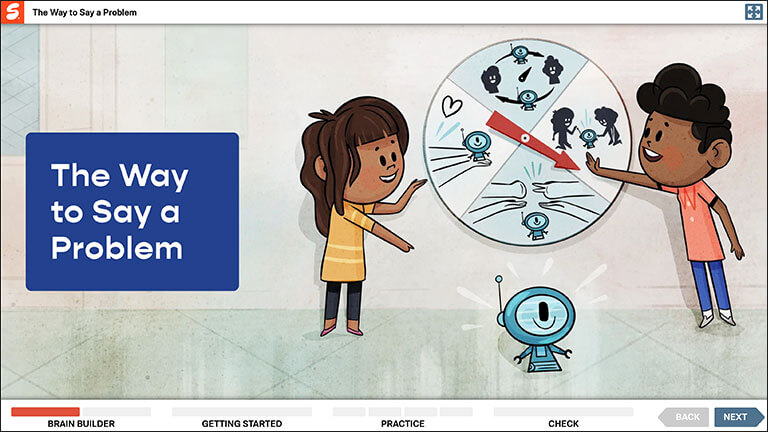
The Way to Say a Problem
Grade 2, Lesson 16